
IN THE STUDIO · GESTURE · REVISION · SURFACE
The Moment Paint Stops Obeying
There is always a point when the reference becomes less useful than the painting itself. From there, every decision must answer to the surface rather than the original view.
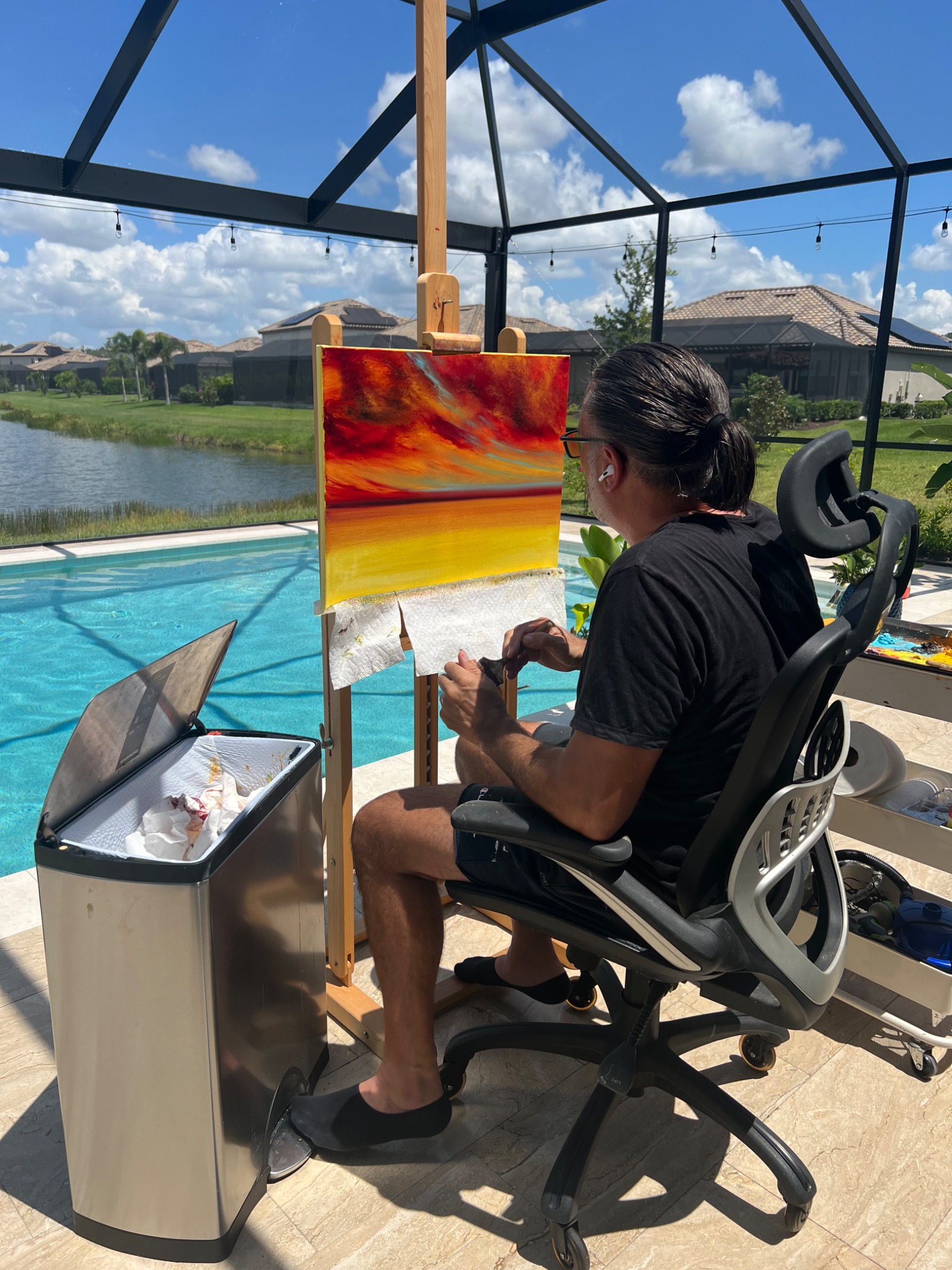
There is always a point when the reference becomes less useful than the painting itself. From there, every decision must answer to the surface rather than the original view.
At the beginning of a painting I may rely heavily on observation. I need enough structure for the work to establish itself: large shapes, relationships of light and dark, the direction of movement across the canvas.
But if I continue obeying the reference for too long, the painting can become careful rather than alive.
When reference becomes resistance
Eventually something happens on the surface that was not planned. A scraped passage reveals an unexpected color. A brushstroke creates an edge more convincing than the one in the photograph. A palette knife leaves a mark that changes the balance of the whole area.
At that point the question changes. I stop asking whether the mark is accurate and start asking whether the painting needs it.
The most useful moment is often when the painting stops doing what I expected.
Revision is part of the surface
I do not think of revision as correcting mistakes. Layers that are painted over, scraped back or partially revealed become part of the history of the work.
That history gives oil paint much of its physical presence. Transparent passages can sit over earlier decisions while thicker marks interrupt them. The surface begins to carry time.
Letting paint speak
Brush and palette knife behave differently, and I value the tension between them. The brush can soften and connect. The knife can break a passage open, create a hard interruption or leave paint standing physically above the canvas.
The finished painting works when those decisions no longer feel like techniques. They simply become the language of that particular landscape.