
WINTER LIGHT · SILENCE · RESTRAINT · STRUCTURE
When Less Becomes More
Snow removes information. That reduction can make every remaining branch, path and shadow feel more deliberate. Winter is one of the clearest reminders that restraint can carry emotion.
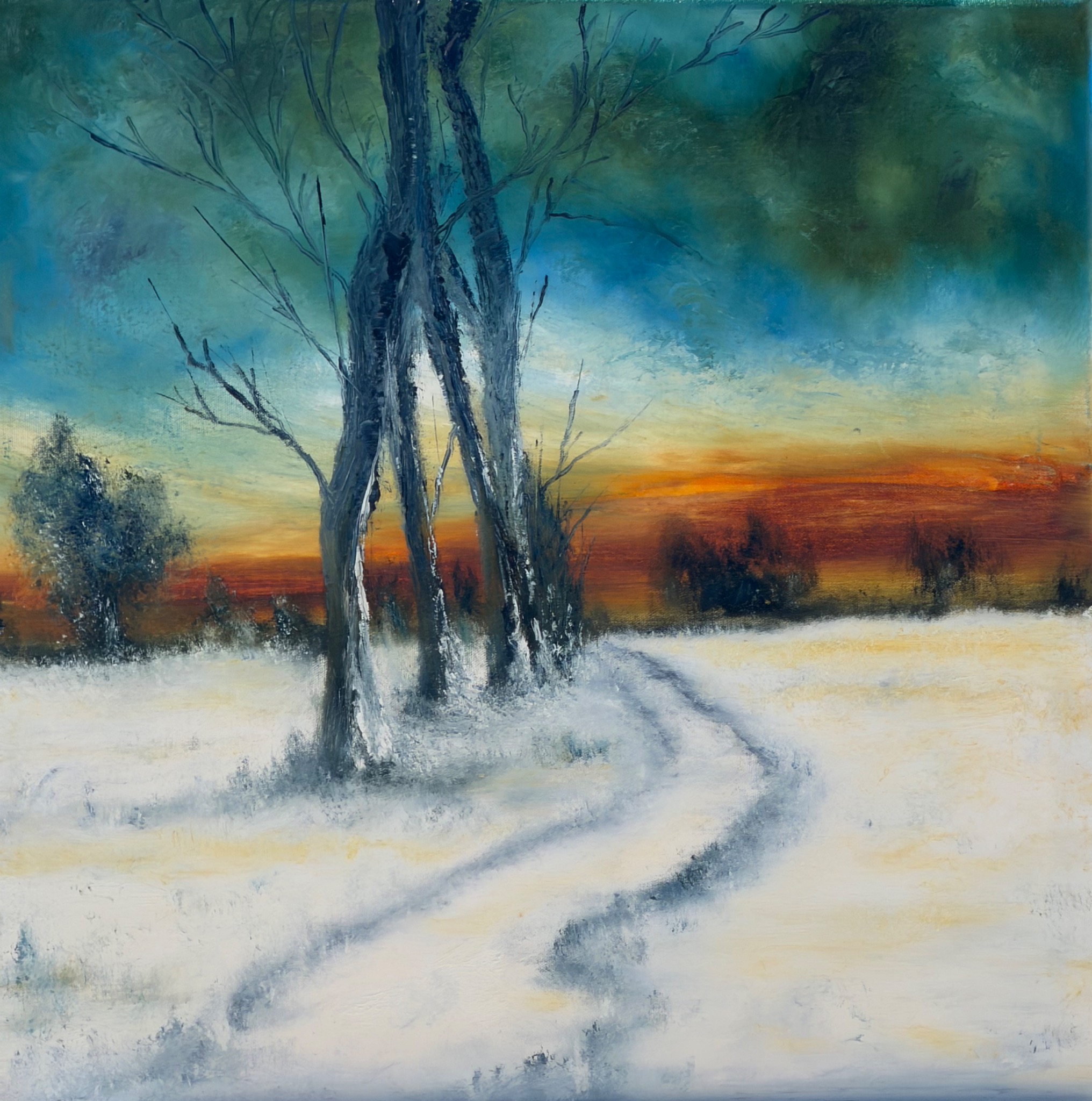
Snow removes information. That reduction can make every remaining branch, path and shadow feel more deliberate. Winter is one of the clearest reminders that restraint can carry emotion.
A winter landscape can initially seem simpler than a summer one. Color is reduced, foliage disappears and large areas may appear almost empty. But that apparent simplicity makes every decision more visible.
There are fewer places for the painter to hide.
The value of restraint
When the landscape offers less information, I become more aware of shape, interval and edge. A single dark tree against snow can carry more weight than an entire mass of summer foliage.
The temptation is to fill empty areas because they feel unfinished. Often the better decision is to leave them alone.
Silence in a painting is not an absence. It is something deliberately left undisturbed.
Painting white without white
Snow is rarely simply white. It absorbs the color of the sky, reflects nearby forms and changes constantly with the angle of the light. Cool passages can sit beside surprisingly warm ones.
Those subtle shifts are what give a winter painting its atmosphere. Too much contrast and the quiet disappears; too little and the structure is lost.
What remains
Winter strips the landscape back to essentials. Paths become clearer, branches become drawings against the sky and distance can feel unusually still.
That economy influences more than my winter paintings. It reminds me that a painting does not become stronger because more has been added. Sometimes it becomes stronger because something unnecessary has been removed.