
WATER & REFLECTION · MOVEMENT · ATMOSPHERE
Why Water Returns
Water is never visually still. It borrows color from the sky, breaks reflections apart and quietly reorganizes the landscape around it. That instability is exactly what keeps drawing me back.
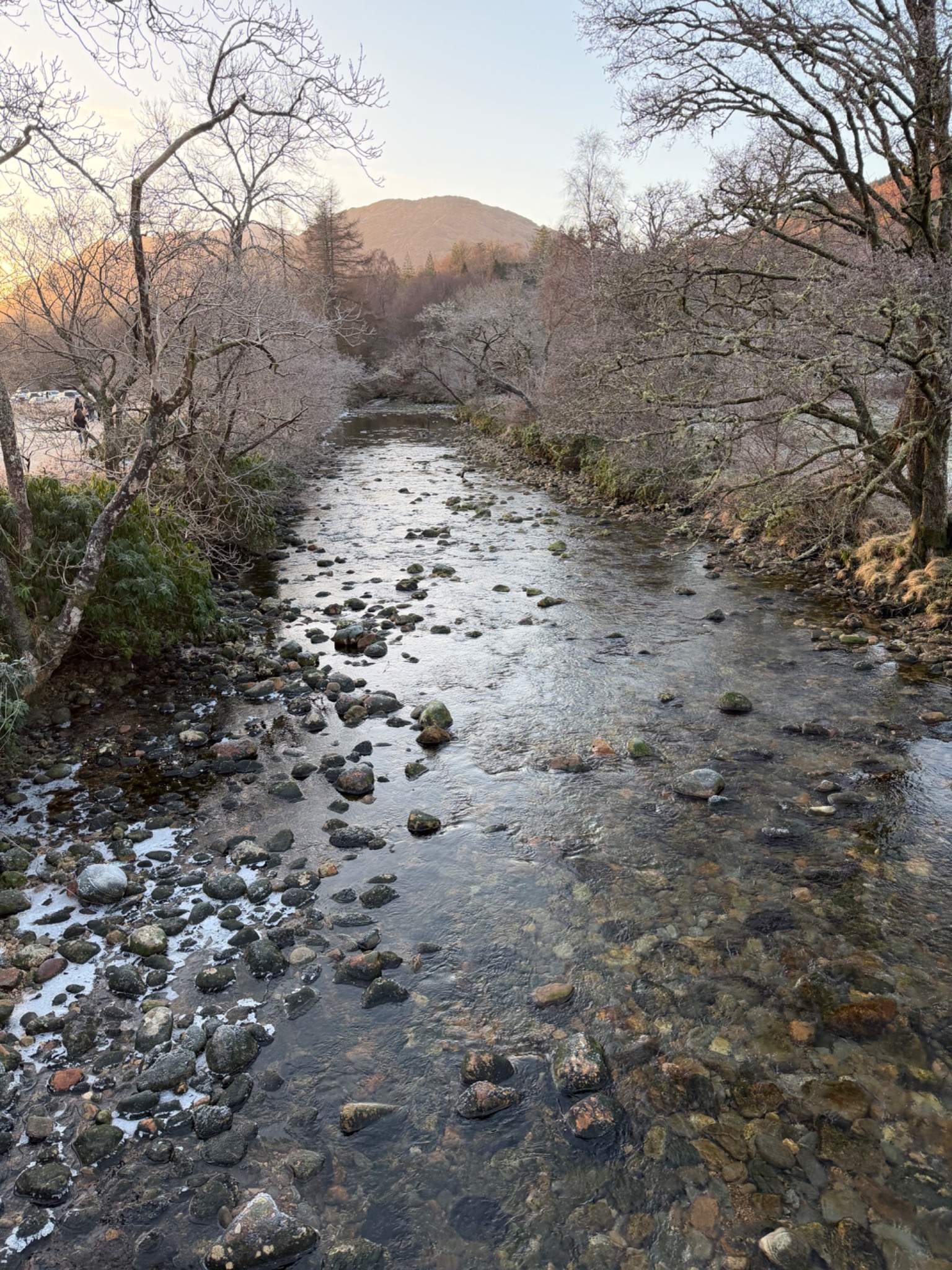
Water is never visually still. It borrows color from the sky, breaks reflections apart and quietly reorganizes the landscape around it. That instability is exactly what keeps drawing me back.
Even apparently calm water is changing from one moment to the next. A reflection stretches, disappears and reforms. Light travels across the surface. A dark bank becomes a shape in the water and then dissolves as the wind changes.
For a painter, that movement creates a useful problem. There is no single version to copy. The subject is already transforming itself.
Reflection is not repetition
I am less interested in painting a perfect mirror image than in what reflection does to a landscape. It can simplify complicated forms, pull distant colors into the foreground and connect parts of a scene that otherwise feel separate.
A river can carry the sky through the middle of a painting. A small interruption in the surface can break that sky into fragments. Those relationships are often more important than describing the water literally.
Water reflects the landscape, but it never returns it unchanged.
Movement held in paint
Paint has its own movement. A dragged brushstroke, a broken edge or a passage made with the palette knife can suggest the instability of water without trying to illustrate every ripple.
I often find that the less I explain, the more convincing the water becomes. A few shifts in value and color can allow the eye to complete what the brush has only suggested.
Why I return
Water gives me a way to paint light without painting light directly. It also introduces uncertainty. The landscape above may feel solid and permanent, while its reflection below is continually being rearranged.
That tension between permanence and change is probably why water continues to appear in my work. It turns observation into something less fixed, and that is where painting becomes interesting.